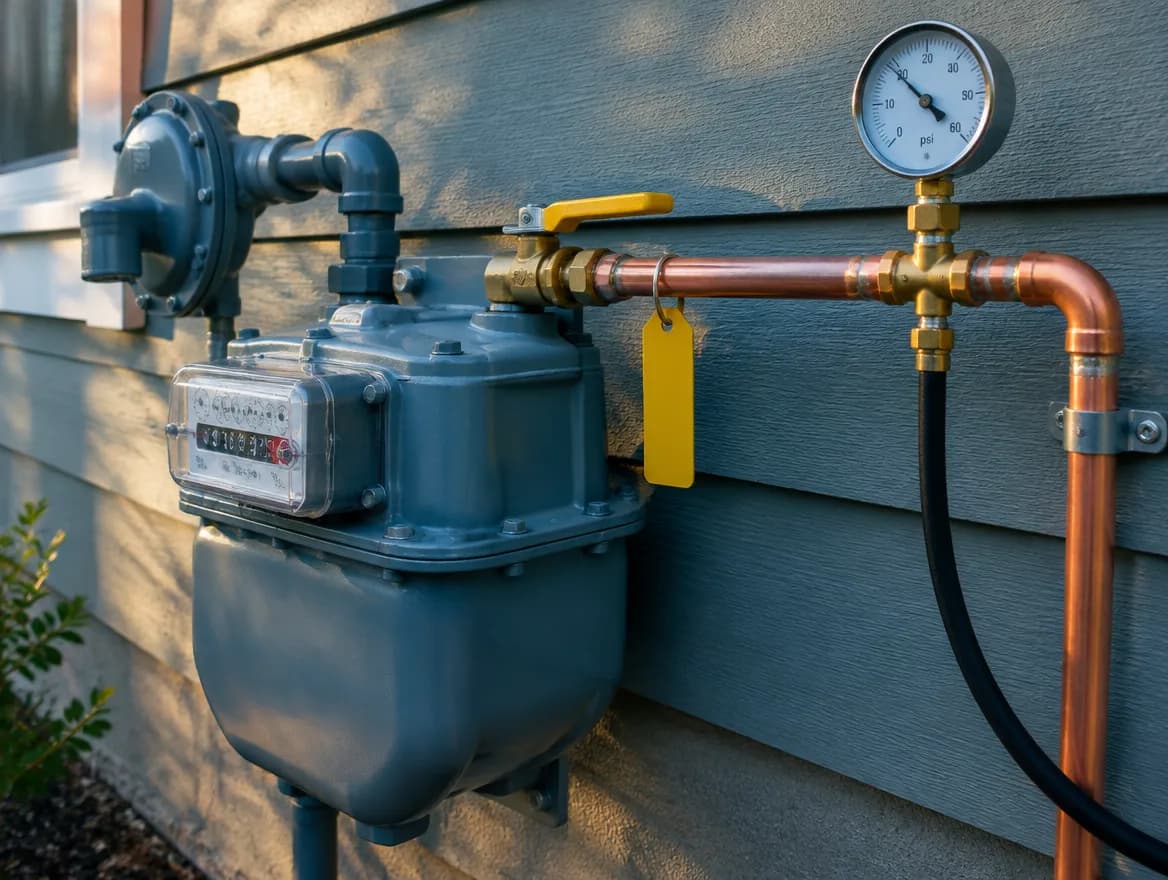
Most of the Gold Coast hinterland isn't connected to natural gas, so homes from Tallai and Bonogin to Springbrook and Tamborine Mountain run their cooktops, hot water and heaters on bottled LPG. It's safe when it's installed and maintained properly. This guide covers the parts of an LPG setup homeowners should know about.
Most hinterland homes from Tallai to Tamborine Mountain run on bottled LPG, and we install and inspect those setups.
How LPG behaves
LPG is heavier than air. If it leaks, it sinks and collects in low spots: drains, pits, under floors and in hollows. That's the main reason cylinder placement rules exist. LPG has no natural smell; a strong odorant is added so leaks can be detected. A rotten-egg or garlic smell near the cylinders or an appliance should always be taken seriously.
Cylinder placement and clearances
The standards set minimum distances between LPG cylinders and openings into the house such as windows and doors, drains and pits, and ignition sources such as air-conditioner units, hot water flues and electrical equipment. Cylinders must stand upright on a firm, level base and be secured. Over the years, a setup that was compliant when installed can end up too close to a new window, air-conditioner or garden feature, so it's worth checking whenever you renovate.
Regulators and changeover valves
The regulator reduces the cylinder's pressure to what your appliances need. Exposed to sun and rain, regulators wear, and older ones should be checked by a gas fitter. Many homes have two cylinders with an automatic changeover valve, which switches to the full cylinder when one runs out. If appliances burn low, the flame looks yellow and lazy, or the changeover indicator is stuck, have the setup looked at.
If you smell gas
- Don't use switches, phones near the smell, flames or anything that could create a spark.
- If it's safe, turn off the cylinder valves.
- Open doors and windows and move people away from the area.
- Call your LPG supplier's emergency number (on the cylinder or your account), or 000 if there's immediate danger.
- Have a licensed gas fitter find and fix the leak before the gas is turned back on.
When to get an LPG inspection
- When you buy a property on bottled gas.
- Before renting a property out.
- After renovations near the cylinders.
- When the regulator or flexible connections are old or weathered.
- If you've noticed a smell, unusual flames or appliances that won't stay lit.
We install, relocate and inspect LPG setups across the hinterland. See LPG gas fitting on the Gold Coast and plumbing in the Gold Coast hinterland.
Need help on the Gold Coast?
Tensor Plumbing is a licensed plumber and gas fitter based in Parkwood, servicing Gold Coast suburbs and the hinterland within about an hour. See LPG gas fitting on the Gold Coast, plumbing in the Gold Coast hinterland and LPG hot water, or find your suburb. When you're ready, request a quote online and attach a photo or two.
Have a standards question first? Ask Tensor AI about AS/NZS 5601.1 gas installation rules, our free plumbing standards assistant. It answers in plain English with the clause it relied on.
Related reading: Smell Gas at Home? What to Do First (Gold Coast) and When to Call a Licensed Gas Fitter in Queensland.
General information only
This article is general information about LPG safety at home. It is not a substitute for a site-specific inspection by a licensed plumber, and what can be found or confirmed on any property depends on site conditions and accessible evidence.