Gold Coast
Solahart solar hot water install
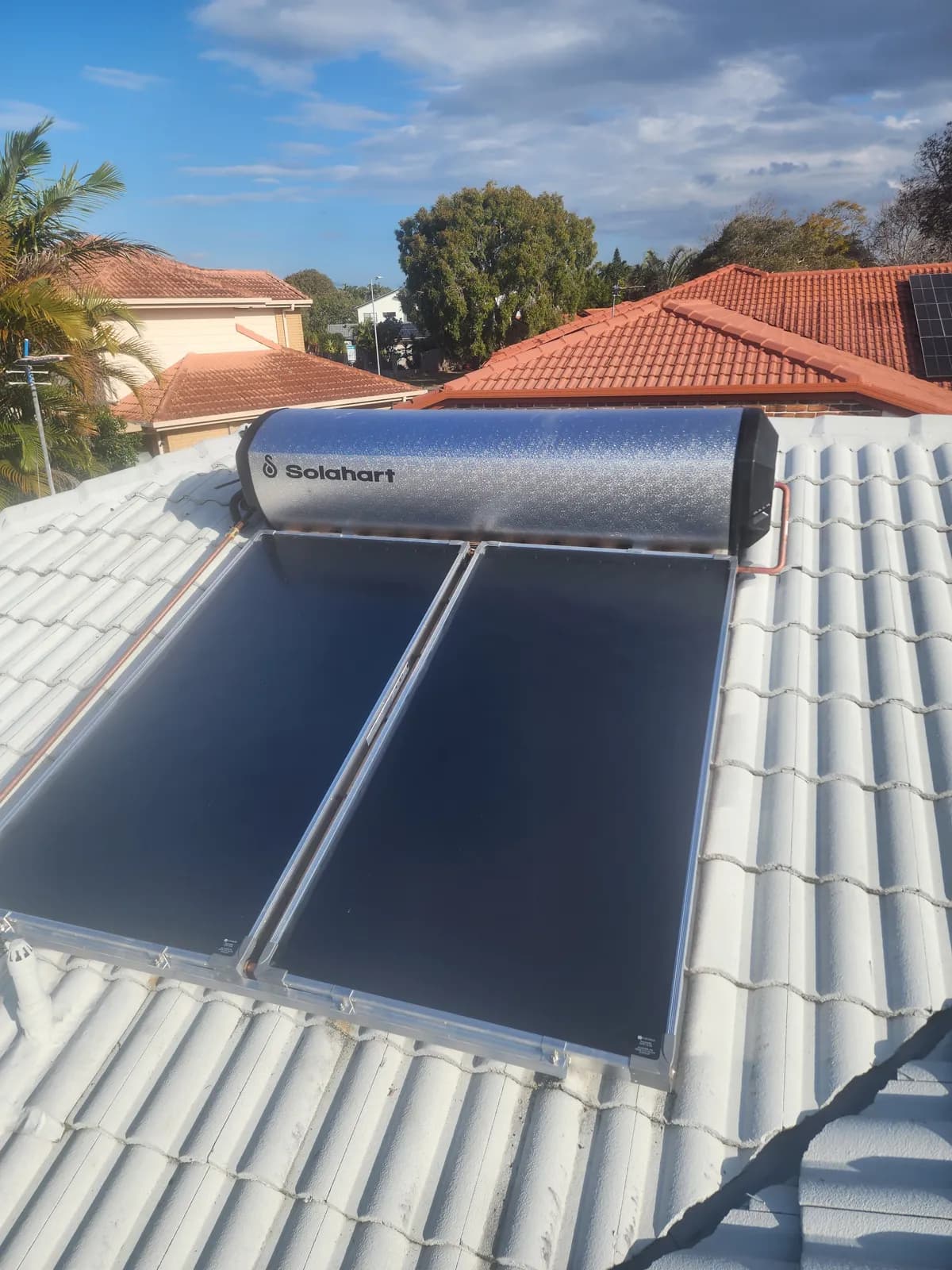
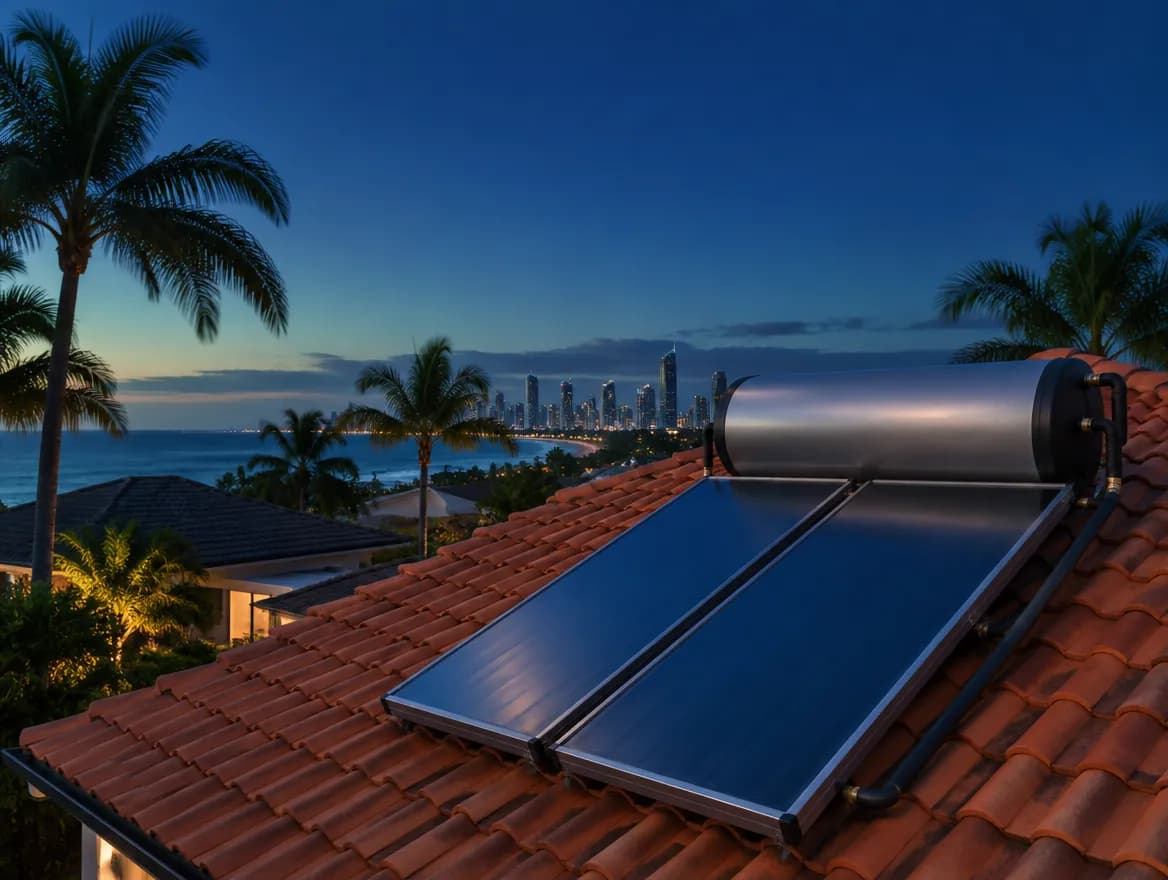
A new roof-mounted Solahart system: two flat-plate collectors with a close-coupled tank on a tiled roof, plumbed in with the valves and paperwork a compliant hot water install needs.
HW-04 · Solar hot water
Solar hot water on the Gold Coast works hard, and many roof systems installed 15 to 25 years ago are now due for repair or replacement. Based in Parkwood, we diagnose solar systems methodically, fix boosters, valves and leaks, and install new systems such as Solahart, for homes in Arundel, Helensvale, Burleigh, Robina and across the Gold Coast.
Typical problems
What a visit may involve
Discussing usage, symptoms and the system's age and type
Inspecting accessible valves, tank, boost and connections
Safe roof access assessment before any roof-level inspection
Explaining whether repair, servicing or replacement (including a heat pump) is worth considering
What you receive
Scope and limits
Roof work depends on safe access, weather and roof condition. Electrical components of boosted systems may require a licensed electrician.
Solar hot water not heating? Get it diagnosed before you replace it.
Local knowledge
A lot of Gold Coast solar hot water was installed in the 1990s and 2000s: roof-mounted Solahart, Edwards and similar close-coupled systems, and split systems with a tank on the ground. Many are now 15 to 25 years old. They rarely fail all at once. More often the electric or gas booster starts doing most of the work, a relief valve weeps, or a collector or tank begins to leak.
Most solar systems have more than one valve: a pressure and temperature relief valve, a tempering valve, and on some systems frost or overheat protection valves on the collectors. Frost is rare on the coast but does happen in the hinterland; overheat protection matters in summer. Salt air near the beach corrodes collector frames, roof fixings and fittings faster, so beachside systems from Burleigh Heads to Currumbin are worth checking more often.
We start with the whole system before quoting a part, because a new valve on a tank that's about to fail isn't good value. When replacement makes sense we compare new solar with a heat pump, and apply the federal STC discount where the system is eligible.
Good to know
A solar system is several parts working together: collectors on the roof, a tank, valves, and an electric or gas booster. Knowing which part is which makes faults easier to describe and diagnose.
Rules and standards that apply
Close-coupled (thermosiphon) systems have the tank on the roof directly above the collectors. Hot water rises into the tank on its own, with no pump. Split systems keep the tank at ground level, and a small pump and controller circulate water to the roof collectors when the sun is on them. Collectors are either flat glass panels or rows of evacuated glass tubes.
On split systems, the circulating pump, controller or temperature sensors are frequent culprits: the sun is shining but the tank stays cool. On any system, the booster element or thermostat can fail (electrical work), the relief valve can start discharging constantly, and roof pipework insulation breaks down in the sun, letting heat escape. Collectors can also leak or be damaged by hail.
Our article on solar hot water that isn't heating walks through these in more detail, including what you can safely check yourself.
The booster tops up the temperature when the sun can't. If it runs early in the day, it heats the water before the sun gets the chance, and you pay for energy you didn't need. Boosting later in the day, or on a controlled-load tariff, usually makes better use of the sun. A high power bill with plenty of hot water is often a booster setting, not a fault.
Salt air near the beach corrodes collector frames, fixings and external fittings faster, so systems in beachside suburbs are worth checking more often. In cooler elevated areas of the hinterland, frost protection on the collectors matters. Older systems rely on a frost valve that can fail and leak.
Weigh up the age and condition of the tank, the state of the collectors, whether parts are still available, and the current STC value on a replacement. A tank that's leaking from its body usually means replacement. A failed pump, controller or valve on a sound system is often worth repairing. If the roof is shaded or unsuitable, a heat pump can give similar running costs with nothing on the roof.
Queensland work health and safety rules require proper fall protection for roof work. We assess roof access before any roof-level inspection, and weather or roof condition can mean coming back another day. Please don't go up to check the panels yourself.
Real work
Photos from our own jobs. Locations are kept to the suburb at most, for our customers' privacy.
Gold Coast
A new roof-mounted Solahart system: two flat-plate collectors with a close-coupled tank on a tiled roof, plumbed in with the valves and paperwork a compliant hot water install needs.
Weighing up repair against replacement? Compare: hot water systems on the Gold Coast, heat pump hot water, electric hot water, gas hot water and hot water maintenance.
Reviews
Read what Gold Coast customers say on Google.
Reviews from real customers live on our Google Business Profile.
Service areas
Based in Parkwood, we cover Gold Coast suburbs within about 30 minutes: from Ormeau and Pimpama in the north to Burleigh and Currumbin in the south, and out to Nerang and Mudgeeraba.
All Gold Coast service areas · Not listed? Call us and we'll confirm.
Questions
Yes. Solar hot water repairs and servicing are available across the Gold Coast, including the southern suburbs. Roof work depends on safe access and the weather on the day.
Yes. We supply and install Solahart and other solar systems, and compare them with a heat pump so you can choose what suits your roof and household.
It depends on the fault, the age and condition of the tank and collectors, and parts availability. We explain the trade-offs so you can decide.
We will confirm on enquiry whether we service your system type. Tell us the brand and model if you know it, or send a photo of the tank label.
No. Roof access carries real fall risk. Leave roof inspection to someone with the right equipment and training.
Lower sun and shorter days mean the collectors contribute less, so the booster does more of the work. If the water is cold even with the booster on, the booster element, thermostat or a valve may have failed. Shading from trees that have grown is another common cause.
Solar tanks can get very hot, and a small discharge as the water expands is normal. A constant flow usually means a worn valve or high water pressure, and is worth having checked.
Often 15 to 20 years for the tank and longer for well-kept collectors, depending on water quality, installation and maintenance. Pumps, controllers and valves are usually replaced along the way.
Connected systems
 TP-04
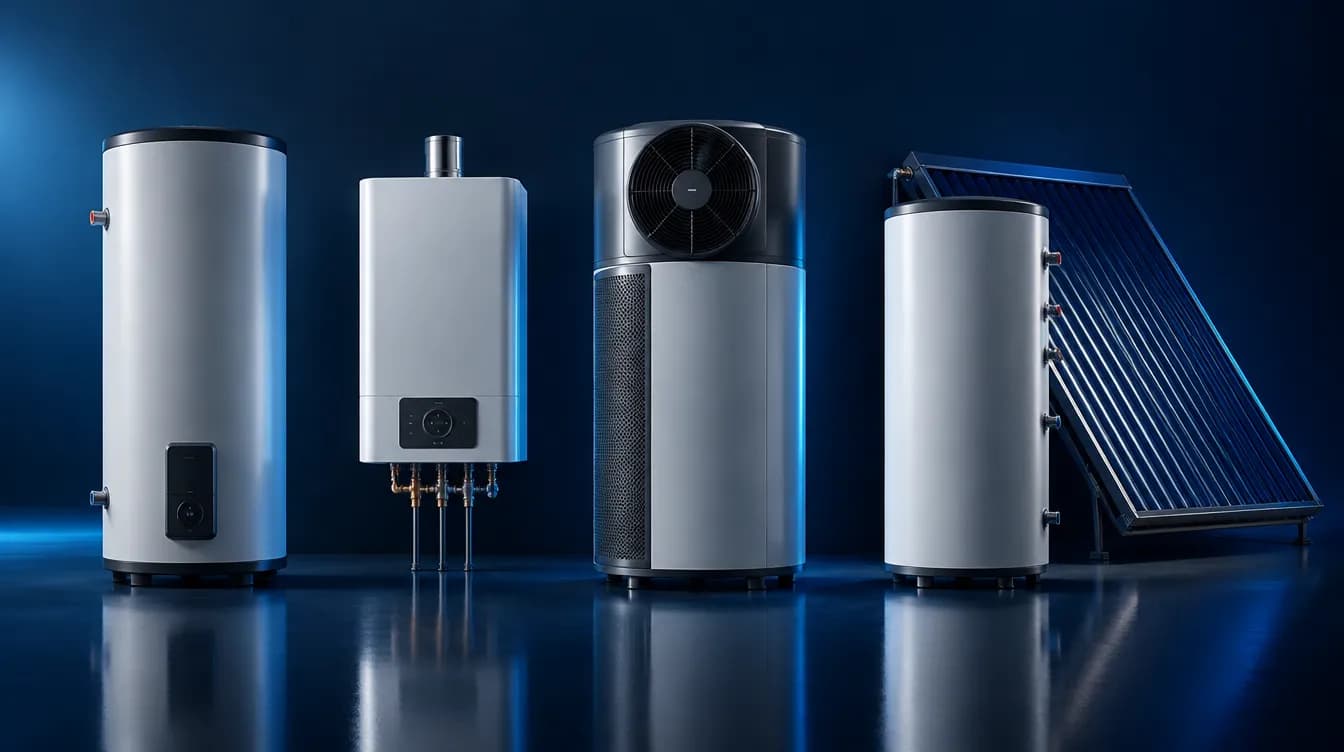
No hot water? Repairs, replacement and new installs for electric, gas, solar and heat pump systems across the Gold Coast.
Explore hot water systems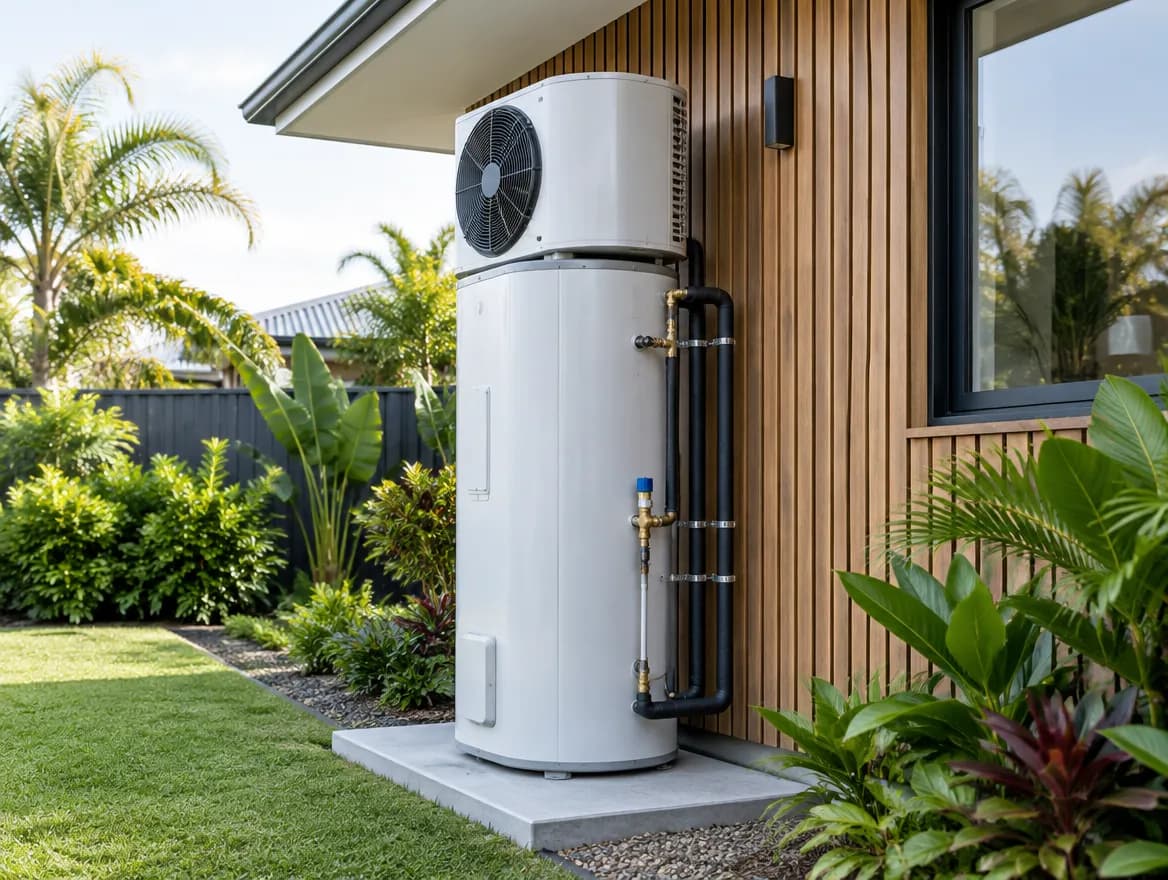 HW-03
Heat pump hot water installs on the Gold Coast, with the federal STC discount where eligible and quiet, sensible placement.
Explore heat pump hot water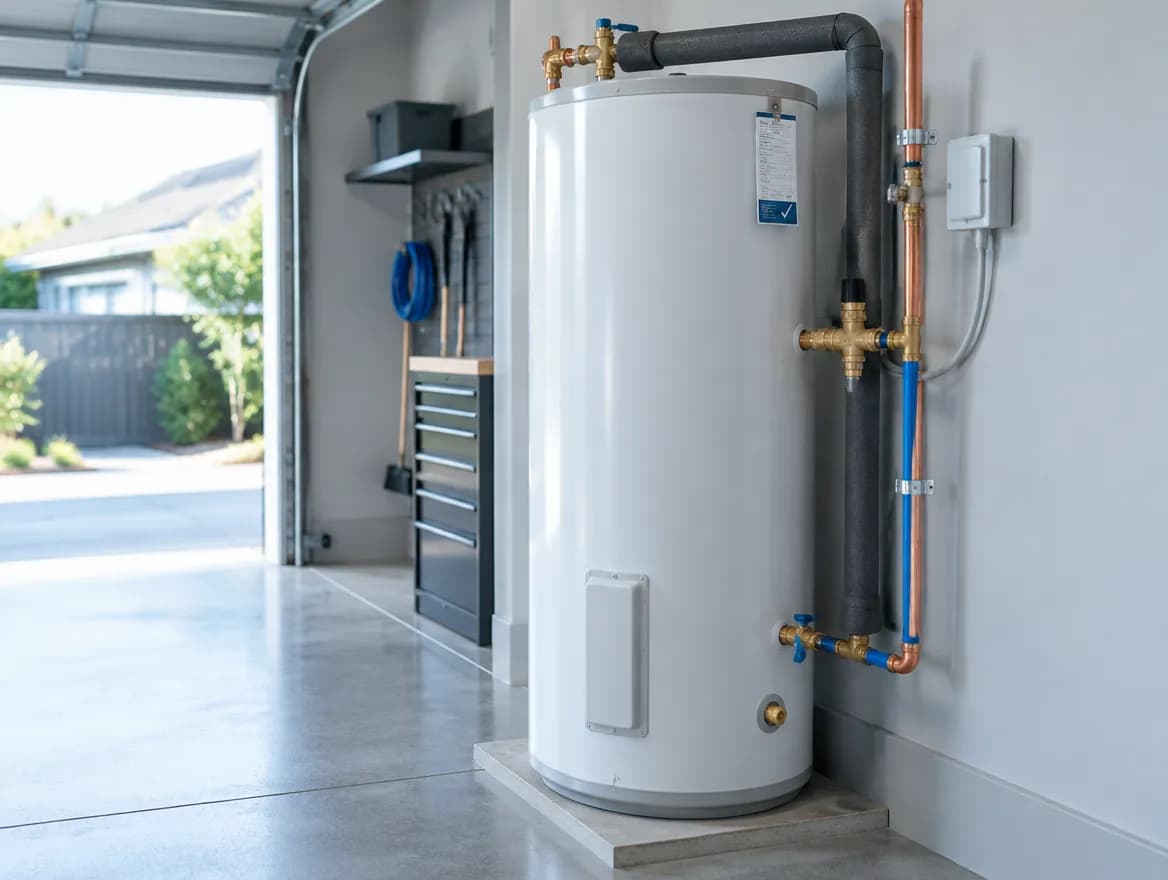 HW-01
Electric hot water repairs and replacements on the Gold Coast, sized for your household and your off-peak tariff.
Explore electric hot water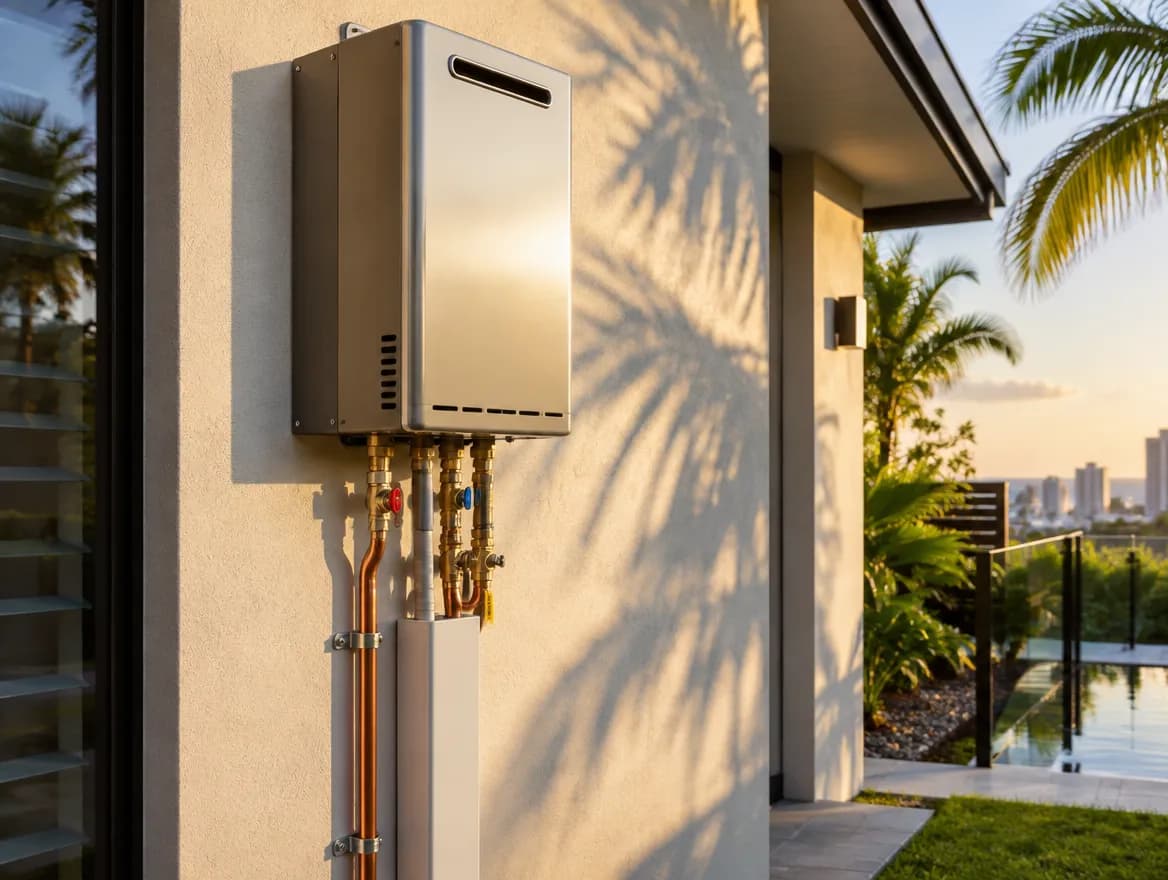 HW-02
Gas continuous flow and storage hot water on the Gold Coast: repairs, servicing and replacement on natural gas or LPG.
Explore gas hot waterLet's understand the problem
Share what you've noticed, where the property is and what kind of help you need. We'll confirm whether the job fits our service area and scope, then explain the next step.