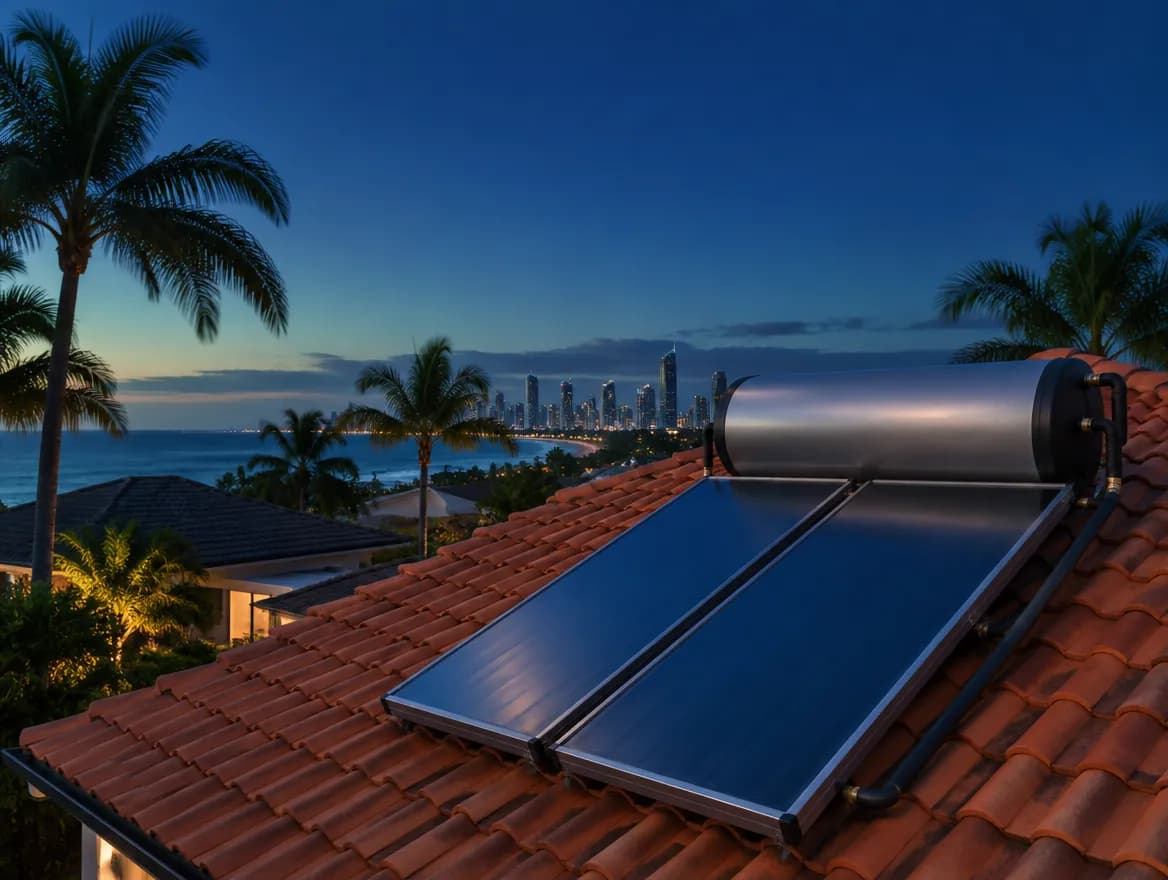
Solar hot water systems suit the South East Queensland climate well, but they are still mechanical and electrical systems with parts that wear over time. When the water is lukewarm or cold, the cause may be as simple as weather and usage, or it may involve the collectors, the circulation system, valves or the electric or gas booster. Understanding the possible causes can help you describe the problem clearly and decide when to call a licensed plumber.
Many Gold Coast roofs still carry solar systems installed 15 to 25 years ago, so this is a question we're asked often.
Stay off the roof and away from electrical components
Solar collectors are usually roof-mounted, and roof access carries a real risk of falls. Boosters and controllers involve mains electricity. Homeowners should not climb onto the roof, open electrical covers or attempt repairs. Leave this work to appropriately licensed and equipped trades.
How a typical solar hot water system works
Most systems have collectors on the roof that absorb heat from the sun, and a storage tank that holds the heated water. In some designs the tank sits on the roof with the collectors and water circulates naturally. In others the tank is on the ground and a small pump moves water or fluid between the tank and the collectors, controlled by sensors. A booster, either electric or gas, tops up the temperature when solar gain is not enough, such as during cloudy periods or high demand.
Possible causes of a lack of hot water
There are several possible reasons a system may not be heating as expected. Some are simple, others need diagnosis.
- Extended cloudy or rainy weather combined with a booster that is switched off, on a limited tariff, or not operating.
- Higher than usual hot water use, such as extra guests, which can outpace solar gain.
- A tripped circuit breaker or fault affecting the electric booster or pump.
- A failed circulation pump, controller or temperature sensor on split systems.
- Shading of the collectors from new buildings or tree growth.
- Dirty, damaged or ageing collectors that absorb less heat.
- Valve faults, including tempering valves or non-return valves, which may affect temperature or circulation.
- Leaks in the system that reduce performance or allow cold water to mix in.
Safe checks you can make from the ground
There are a few things a homeowner can usually check safely, without going on the roof or opening any covers.
- Consider the recent weather and household water use.
- Check whether the booster switch, if there is a labelled switch inside the home, is on as intended.
- Look at the switchboard to see whether a circuit labelled for the hot water system has tripped. If a breaker trips again after resetting, leave it off and call a licensed electrician or plumber.
- If your system has a controller display, note any error codes or warning lights, and check the owner's manual for what they mean.
- From the ground, look for obvious shading on the collectors or water dripping from the roof or the tank.
- Note whether the relief valve drain is running continuously, which may indicate a fault.
Do not adjust or open valves on the system unless the manufacturer's instructions specifically describe it as a homeowner task. Some valves, if operated incorrectly, can release very hot water.
When to call a licensed plumber
If simple checks do not explain the problem, a licensed plumber can inspect the system safely. Depending on site conditions, this may involve testing the pump and controller, checking sensors and valves, inspecting collectors using appropriate roof access and fall protection, and checking for leaks. Electrical faults may need a licensed electrician as well.
It helps to note the system brand and model from the tank label, its approximate age, any error codes, and when the problem started. With that information, the plumber can discuss whether a repair, component replacement or system replacement is the more sensible option, depending on the system's condition.
Need help on the Gold Coast?
Tensor Plumbing is a licensed plumber and gas fitter based in Parkwood, servicing Gold Coast suburbs within about 30 minutes. See solar hot water repairs on the Gold Coast, heat pump hot water as an alternative and all hot water systems, or find your suburb. When you're ready, request a quote online and attach a photo or two.
Related reading: Replacing a Hot Water System in Queensland: Rules & Options.
General information only
This article is general information about solar hot water systems that are not heating. It is not a substitute for a site-specific inspection by a licensed plumber, and what can be found or confirmed on any property depends on site conditions and accessible evidence.