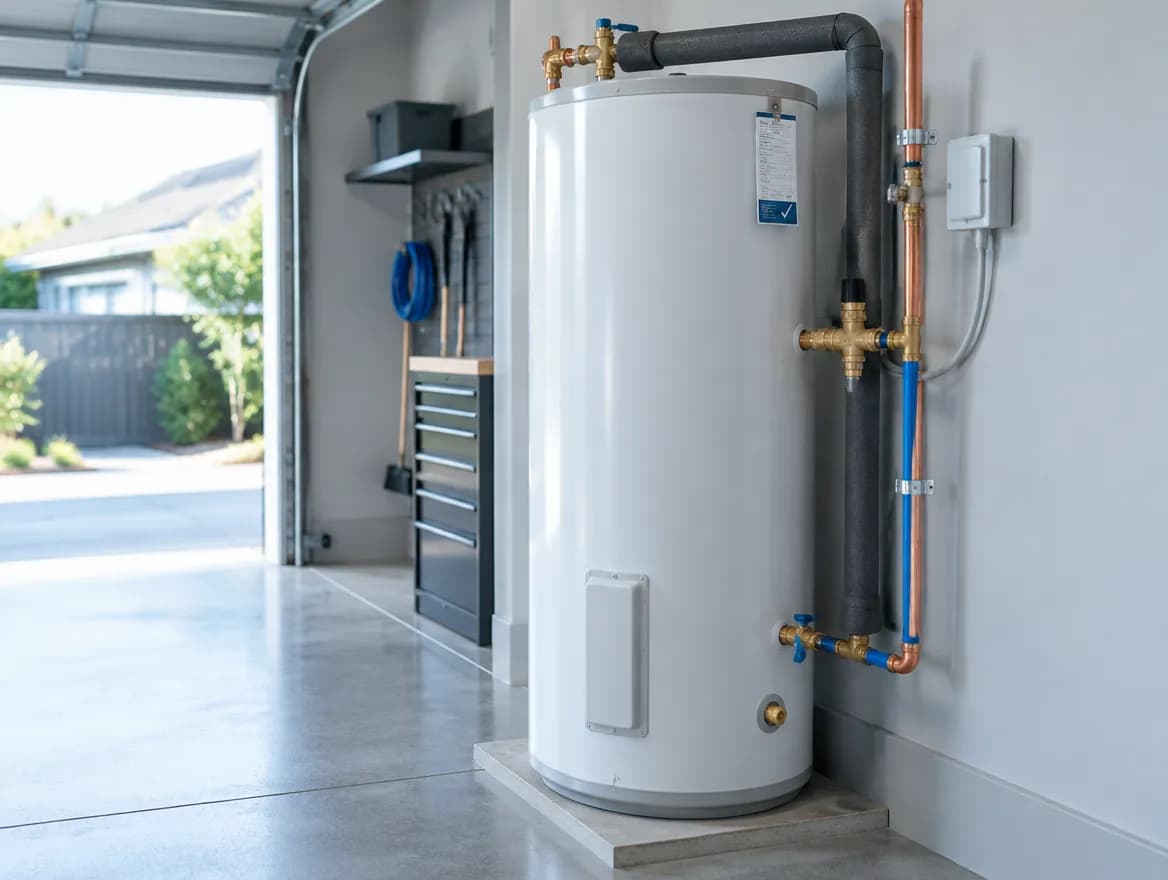
Short answer: a small amount of water from the relief valve while your hot water system is heating is normal. A constant trickle, a steady stream, or water running all day is not, and it's worth having a licensed plumber look at it. This article explains why the valve releases water, how to tell the difference, and what you can safely check yourself.
On the Gold Coast, where many homes have mains pressure on the high side, a dripping relief valve is one of the most common hot water calls we get.
What the relief valve does
Storage hot water systems, whether electric, gas, heat pump or solar, have a temperature and pressure relief valve (often called a TPR or PTR valve) near the top of the tank. Water expands as it heats. With nowhere else to go in a closed tank, that expansion has to be released, and the valve is designed to let it out. It also opens if the temperature or pressure in the tank rises beyond a safe limit, so it's a critical safety device. Never block, cap or tie it off.
Many systems also have an expansion control valve on the cold water inlet, which handles most of the normal expansion. Where one is fitted, you may see water from it rather than from the relief valve during heating.
Normal or a problem: how to tell
- Usually normal: a few drips, or a short release of water, while the unit is heating, typically overnight on an off-peak tariff or during the day on solar.
- Worth checking: water dripping at all hours, even when the unit isn't heating.
- Worth checking soon: a steady trickle or stream from the drain line, or water pooling around the base of the unit.
- Act now: steam, a hissing sound, or very hot water discharging continuously. Turn the system off at the switchboard (electric) or the unit (gas) if it's safe to reach, and call a licensed plumber.
Common causes of constant discharge
- A worn valve. Relief valves wear out. Manufacturers commonly recommend replacing them about every five years.
- High mains water pressure. If the incoming pressure is too high, the valve may release water constantly. A pressure-limiting valve on the supply is the usual fix.
- A failed expansion control valve, which pushes more of the expansion through the relief valve.
- Overheating, from a faulty thermostat or control. This is the most serious cause, and the reason continuous hot discharge should be treated as urgent.
- Debris on the valve seat, sometimes after the lever has been lifted, which stops it sealing.
Don't try to repair the valve yourself
The relief valve protects the tank from dangerous pressure and temperature. Replacing it, adjusting pressure-limiting valves or working on the thermostat is licensed plumbing or electrical work. Water from the valve can also be scalding hot.
What you can safely check
- Note when it drips: only during heating, or all the time? That one detail helps a plumber diagnose it.
- Check the age of the system on its label. If the valve has never been replaced and the unit is over five years old, a worn valve is likely.
- Manufacturers recommend gently lifting the easing lever every six months to keep the valve free. Lift it slowly, keep clear of the drain outlet because the water is hot, and lower it gently. If the valve keeps running after you let go, call a plumber. Skip this check if the valve hasn't been touched in years, as an old valve may not reseat.
- Take a photo of the unit's label and of the valve, and include them when you enquire.
Why it's worth fixing
A valve that runs constantly wastes water, and on an electric or gas system it wastes the energy used to heat it. It can also hide a fault, such as overheating or excessive pressure, that will shorten the life of the tank. Fixing it is usually a small job compared with replacing a tank that has been under stress for months.
Need help on the Gold Coast?
Tensor Plumbing is a licensed plumber and gas fitter based in Parkwood, servicing Gold Coast suburbs within about 30 minutes. See hot water repairs on the Gold Coast, electric hot water and relief and tempering valve maintenance, or find your suburb. When you're ready, request a quote online and attach a photo or two.
Related reading: Replacing a Hot Water System in Queensland: Rules & Options and Water Meter Moving With Taps Off? How to Find the Leak.
General information only
This article is general information about hot water relief valves. It is not a substitute for a site-specific inspection by a licensed plumber, and what can be found or confirmed on any property depends on site conditions and accessible evidence.