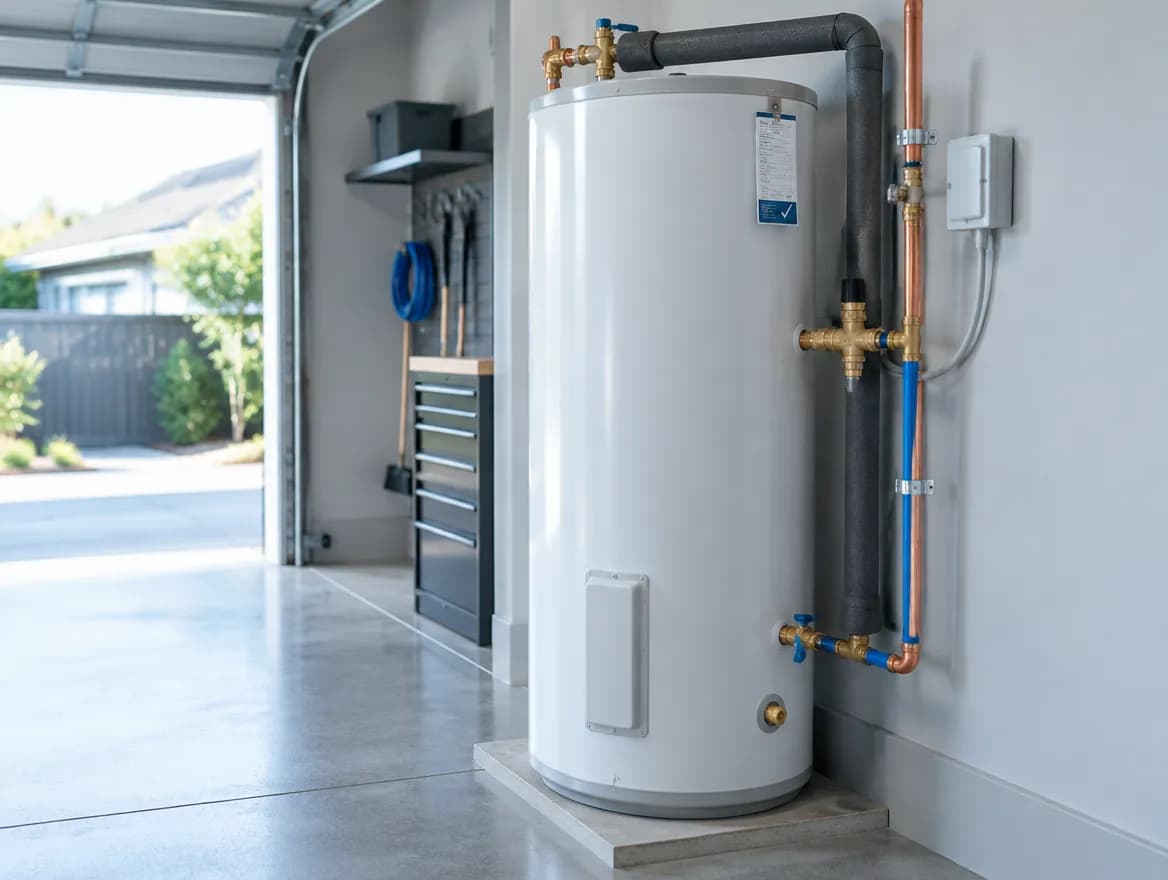
Two temperatures matter for hot water in Queensland homes. Water in the heater needs to be hot enough to control bacteria, and water coming out of bathroom taps needs to be cool enough not to scald. The rules handle both, and the device that makes them work together is usually a small valve most people never notice.
These are the rules we work to on every Gold Coast hot water installation and replacement.
The two numbers: 60 °C stored, 50 °C delivered
Storage water heaters are generally required to heat and store water at 60 °C or more. At that temperature, Legionella bacteria, which can grow in lukewarm water, are controlled. The trouble is that 60 °C water can cause a serious burn very quickly, especially to young children and older people, whose skin is thinner.
So hot water delivered to fixtures used for personal hygiene, meaning baths, showers and basins, is limited to a maximum of 50 °C in most homes. In buildings such as aged care and early childhood facilities, the limit is lower. Kitchen sinks and laundry tubs are not covered by the same limit, so they can receive hotter water for cleaning.
Why 10 degrees makes a big difference
Burn severity rises steeply with temperature. Water at 60 °C can cause a serious burn in about a second; at 50 °C it takes several minutes of contact. That margin is what protects a child who turns the hot tap on in the bath.
How the rules work together: tempering valves
A tempering valve sits on the hot water outlet and blends in cold water so the water going to the bathrooms leaves at or below 50 °C, while the tank stays at 60 °C or more. Some systems use a thermostatic mixing valve instead, which reacts more precisely to changes in temperature and pressure and is common in care settings. Continuous-flow gas heaters may be able to deliver at a limited temperature directly, depending on the model and how it's installed.
Tempering valves wear over time. If your shower temperature swings, the hot water never gets properly hot, or the bath is hotter than it should be, the valve may need servicing or replacing. It's a job for a licensed plumber, because the outlet temperature has to be tested and set correctly afterwards.
When the rules apply to your home
The delivery temperature requirement applies when a hot water system is installed or replaced. If your home has an older system that was installed before the current rules, it doesn't have to be upgraded just because the rules changed, but replacing the heater brings the installation up to today's requirements. That's one reason a like-for-like replacement can still include a new tempering valve.
- New or replacement heater: storage at 60 °C or more, and delivery to bathrooms at no more than 50 °C.
- Kitchen and laundry: may receive hotter water.
- Care and childcare buildings: a lower delivery limit applies.
- Replacement work is notifiable in Queensland, and the plumber lodges the paperwork.
Checking your own system
You can't safely adjust a tempering valve yourself, but you can notice the signs it's not working: water at the bathroom tap that's too hot to keep your hand under, temperature that swings during a shower, or a valve that's leaking. If you're unsure, a plumber can measure the outlet temperature at a basin in a few minutes during any visit.
For more on what changes when you replace a system, see replacing a hot water system in Queensland.
Need help on the Gold Coast?
Tensor Plumbing is a licensed plumber and gas fitter based in Parkwood, servicing Gold Coast suburbs and the hinterland within about an hour. See hot water replacement on the Gold Coast, electric hot water and tempering valve maintenance, or find your suburb. When you're ready, request a quote online and attach a photo or two.
Have a standards question first? Ask Tensor AI about AS/NZS 3500.4 hot water temperature requirements, our free plumbing standards assistant. It answers in plain English with the clause it relied on.
Related reading: Replacing a Hot Water System in Queensland: Rules & Options and Hot Water Relief Valve Leaking? Causes & When to Call a Plumber.
General information only
This article is general information about hot water temperature requirements in Queensland. It is not a substitute for a site-specific inspection by a licensed plumber, and what can be found or confirmed on any property depends on site conditions and accessible evidence.