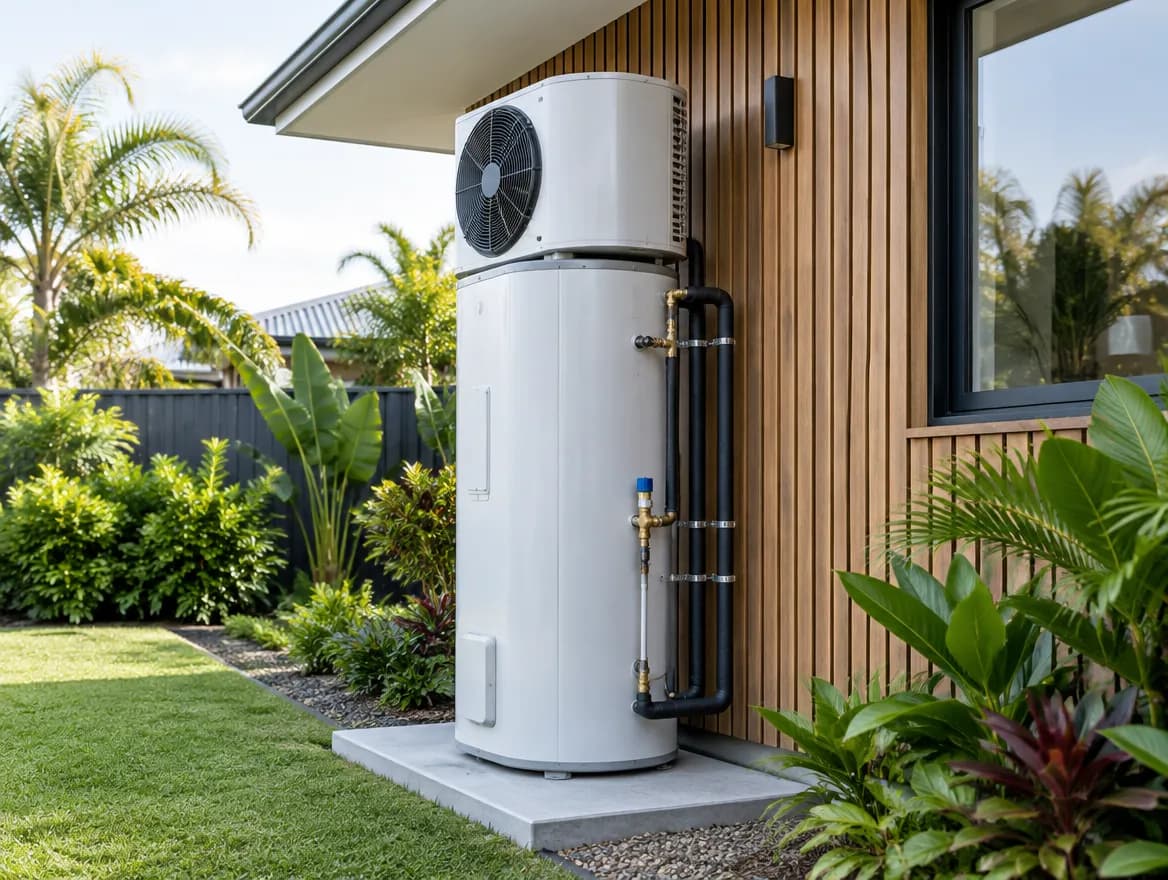
If your hot water system is due for replacement and you want lower running costs, the two usual choices are a solar water heater or a heat pump. Both can heat water using a fraction of the energy of an electric element, both can attract the federal STC discount, and both work well in the Gold Coast climate. They suit different homes, though.
This is one of the most common questions we're asked when a Gold Coast hot water system needs replacing.
How each one works
A solar water heater uses collectors on the roof to absorb the sun's heat and transfer it to water in a tank, either on the roof (close-coupled) or on the ground (split system). A booster, electric or gas, tops up the temperature when the sun isn't enough. A heat pump works like a reverse-cycle air-conditioner: it moves heat from the outside air into the water, using electricity to run a compressor and fan. It sits on the ground and has no roof parts.
Running costs compared
- Solar: in full sun, the collectors do most of the heating and the booster only tops up. Running costs can be very low on a north-facing, unshaded roof, and higher if shading means the booster works hard.
- Heat pump: typically uses around a quarter to a third of the electricity of an electric storage tank for the same hot water. Running it during the day on your own rooftop solar power can cut costs further.
- Either way, actual costs depend on household size, tariffs, how the system is set up and when you use hot water.
Roof, space and noise
Solar needs a suitable roof: facing roughly north, strong enough for the collectors (and the tank on close-coupled systems), and unshaded for most of the day. Trees that have grown since a previous system went in are a common reason solar underperforms. A heat pump needs an outdoor spot with good airflow, a level base and space around it for servicing. It makes a low hum while running, so placement away from bedroom windows, yours and the neighbours', matters.
Maintenance and lifespan
Solar systems have more parts on the roof: collectors, roof pipework, frost or overheat valves, and on split systems a pump and controller. Repairs can need roof access. Heat pumps have a compressor and fan that eventually wear, but everything is at ground level. Both have relief and tempering valves that need periodic attention, and most manufacturers recommend a service about every five years.
STCs: the discount on both
Eligible solar water heaters and heat pumps create small-scale technology certificates (STCs) under the federal scheme, and the value is usually applied as a discount on the price. The number of certificates depends on the system and the location. There is currently no separate Queensland rebate for hot water systems.
Which suits which home?
- Good north-facing, unshaded roof, long-term owners: solar is a strong option.
- Shaded or complicated roof, or you'd rather nothing on the roof: a heat pump.
- Rooftop solar power already installed: a heat pump running in the middle of the day makes good use of it.
- Beachside homes: either can work; placement and corrosion-resistant fittings matter more.
- Cooler hinterland sites: choose a heat pump rated for cooler air, or look at solar with frost protection.
We install and repair both, so we'll recommend whichever suits your home. See heat pump hot water on the Gold Coast and solar hot water repairs and installation.
Need help on the Gold Coast?
Tensor Plumbing is a licensed plumber and gas fitter based in Parkwood, servicing Gold Coast suburbs and the hinterland within about an hour. See heat pump hot water on the Gold Coast, solar hot water and hot water replacement, or find your suburb. When you're ready, request a quote online and attach a photo or two.
Related reading: Solar Hot Water Repair Costs: What Affects the Price and Replacing a Hot Water System in Queensland: Rules & Options.
General information only
This article is general information about choosing between solar and heat pump hot water. It is not a substitute for a site-specific inspection by a licensed plumber, and what can be found or confirmed on any property depends on site conditions and accessible evidence.