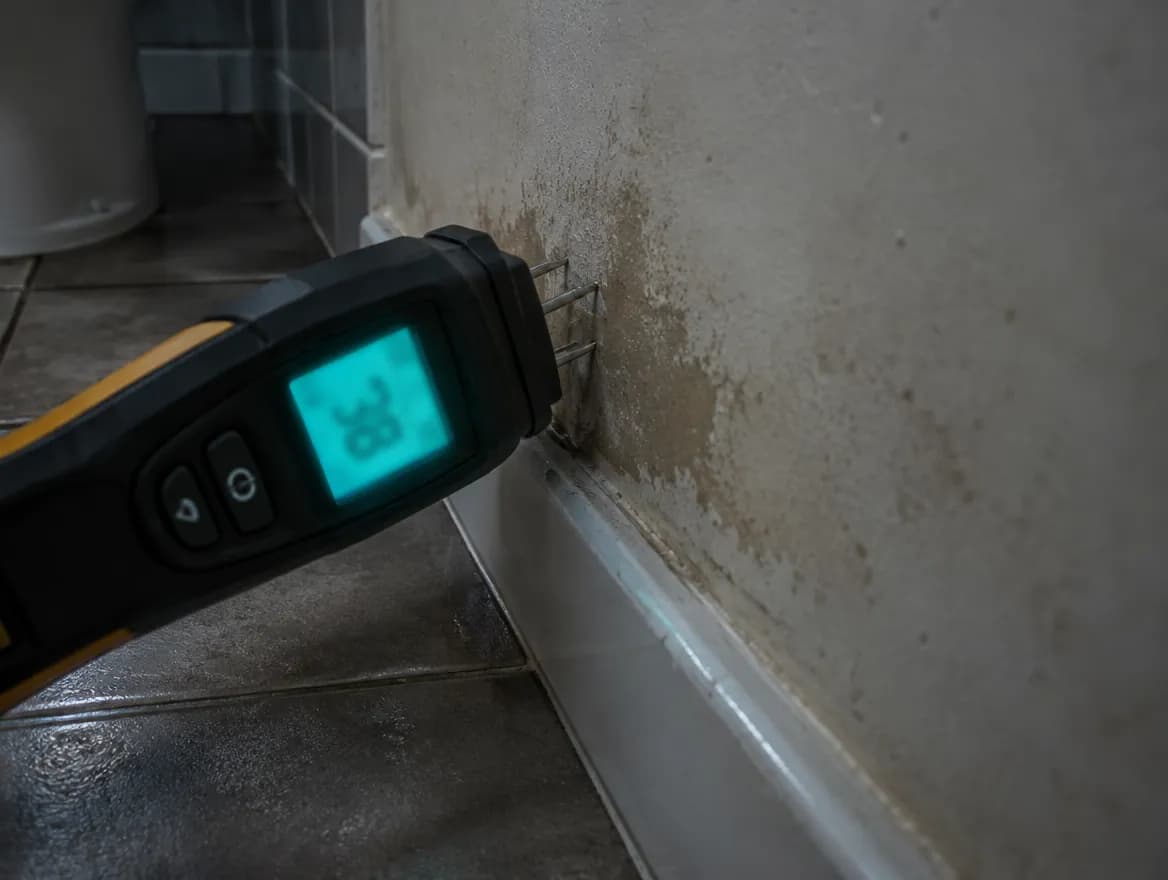
A damp patch on a wall or ceiling tells you water is getting somewhere it shouldn't. It doesn't tell you where it's coming from. Water travels along pipes, frames, slabs and roof sheets before it shows, so the stain is often some distance from the source. Here's how the possibilities are narrowed down.
We investigate plumbing leaks and roof leaks on the Gold Coast, so we see how often the obvious source turns out to be wrong.
Start with timing
- Only after rain: points towards the roof, gutters, flashings, windows or external walls rather than plumbing.
- All the time, rain or shine: points towards a pressurised water pipe, either hot or cold.
- Only after a shower or bath: points towards the shower's waste, seals or waterproofing.
- Only when a particular appliance runs: points towards that appliance's connections or drain.
- Worse on humid days or in cold rooms: may be condensation rather than a leak.
Signs that suggest a slab leak
A warm patch on a tiled floor, a sound of running water with everything off, a meter that keeps moving, cracked or lifting tiles, or a damp patch at the base of an internal wall can all point to a leak in a pipe in or under the slab. Hot water pipe leaks in slabs often show as warmth before they show as water.
Signs that suggest a wall leak
Bubbling paint, swollen skirting, mould low on a wall next to a bathroom or kitchen, or a damp patch that grows after the shower is used suggest a leak inside or behind a wall: a pipe fitting, a mixer body, a shower waste or failed waterproofing.
Signs that suggest a roof leak
Ceiling stains that appear or grow after rain, especially near skylights, penetrations, valleys or where the roof meets a wall, point towards the roof. A ceiling stain under a bathroom, with no rain involved, is more likely plumbing from above.
How testing confirms the source
A plumber confirms a leak with evidence, not just symptoms: a water meter test with everything off, isolating hot and cold services, pressure testing sections, moisture readings to map the damp area, and thermal imaging where it helps. For roof leaks, controlled water testing of sections of roof can show where water gets in. The aim is to reach a finding that's supported by more than one test before anything is opened up.
See leak detection on the Gold Coast, roof leak repairs and spray testing, and how a plumber investigates a hidden leak.
Need help on the Gold Coast?
Tensor Plumbing is a licensed plumber and gas fitter based in Parkwood, servicing Gold Coast suburbs and the hinterland within about an hour. See leak detection on the Gold Coast, roof leak repairs and insurance plumbing reports, or find your suburb. When you're ready, request a quote online and attach a photo or two.
Related reading: How a Plumber Finds a Hidden Water Leak, Step by Step and Thermal Imaging for Leak Detection: How It Works & Its Limits.
General information only
This article is general information about finding the source of a leak. It is not a substitute for a site-specific inspection by a licensed plumber, and what can be found or confirmed on any property depends on site conditions and accessible evidence.