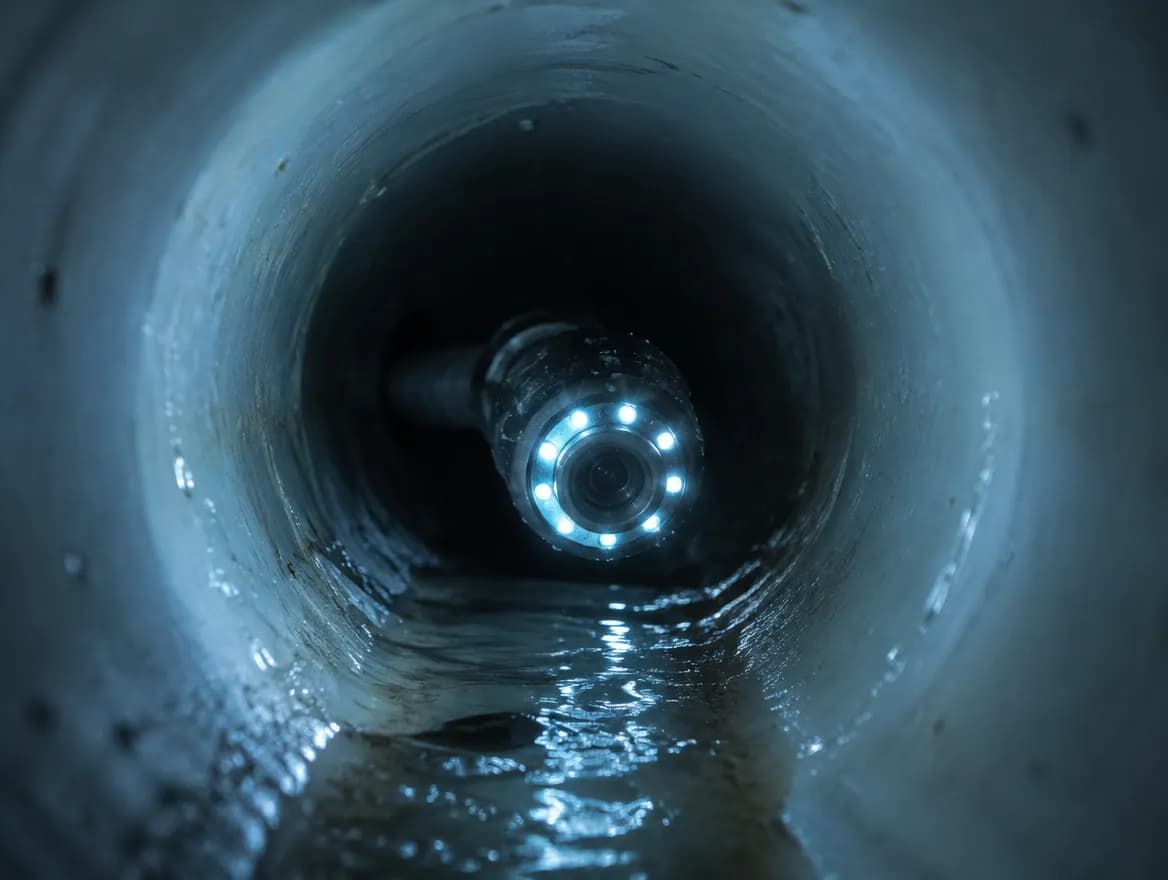
Drains are out of sight for good reason, but that also makes them hard to assess. A CCTV drain inspection uses a small waterproof camera on a flexible cable that is pushed along the pipe, sending live footage back to a screen. It allows a plumber to see the inside of the drain, record what is there and plan any work without excavating first. It is a useful tool, but it is not needed for every blockage.
In older Gold Coast suburbs with clay sewer pipes and big trees, a camera inspection often saves paying for the same blockage twice.
Situations where a CCTV inspection can help
A camera inspection tends to be most valuable when there is a recurring or unexplained problem, or when decisions need to be made about repair or replacement.
- Blockages that keep coming back after clearing.
- Slow drains across several fixtures, which may point to a problem further down the line.
- Suspected tree root intrusion, common in older clay pipes across South East Queensland.
- Sewer smells, damp ground or subsidence near a drain line.
- Before buying a property, particularly older homes, to understand the condition of the drains.
- Before renovation or landscaping work, to locate and assess existing lines.
- After clearing a blockage, to check whether there is underlying damage.
- Where a written report is needed to document drain condition.
What the camera can show
Inside the pipe, the camera may show tree roots entering through joints, cracked or broken sections, displaced joints, sagging sections where water pools, build-up of fat or debris, and foreign objects. Many systems also include a locator that allows the position and approximate depth of the camera head to be traced from the surface, which helps mark out where a problem is before any digging.
Recorded footage can be reviewed later and shared with the owner, a builder or an insurer where relevant. It provides a visual record of the condition observed on the day.
The limits of a camera inspection
A CCTV inspection shows what the camera can see, and what the camera can see depends on site conditions. It is worth understanding the limits before booking.
- Access is needed through an inspection opening, gully or fixture, and some lines have limited access points.
- A full blockage may need to be cleared before the camera can pass.
- Water, debris or heavy root growth can obscure the view of the pipe wall.
- Sharp bends, small-diameter pipes or collapsed sections may stop the camera from travelling further.
- The camera shows the inside surface of the pipe and cannot always show what is happening in the soil around it.
For these reasons, a CCTV inspection may confirm a defect clearly, or it may only show part of the line. A good technician will explain which sections were inspected and which could not be viewed.
What to expect on the day
- The plumber discusses the symptoms and history, and identifies suitable access points.
- If needed, the line is cleared enough for the camera to travel.
- The camera is fed through the line while the plumber watches and records.
- Where a locator is used, the position of notable features may be marked on the surface.
- The plumber explains what was observed and the options available.
It is worth asking in advance whether you will receive a copy of the footage or a short written summary. If the inspection is part of a pre-purchase check, a renovation plan or an insurance matter, a written record of the sections inspected, the observations and any limitations will usually be more useful than footage alone.
Options after an inspection may range from routine maintenance through to targeted repair of a section, relining where appropriate, or replacement. The right choice depends on the condition observed, the pipe material, access and the owner's priorities. If no defect is observed, that is also useful information, because it may point the investigation elsewhere.
Need help on the Gold Coast?
Tensor Plumbing is a licensed plumber and gas fitter based in Parkwood, servicing Gold Coast suburbs within about 30 minutes. See blocked drains and CCTV inspections on the Gold Coast and drain maintenance, or find your suburb. When you're ready, request a quote online and attach a photo or two.
Related reading: Plumbing Maintenance Checklist for Gold Coast Homeowners.
General information only
This article is general information about CCTV drain inspections. It is not a substitute for a site-specific inspection by a licensed plumber, and what can be found or confirmed on any property depends on site conditions and accessible evidence.